
Estimate a Claim Before You File
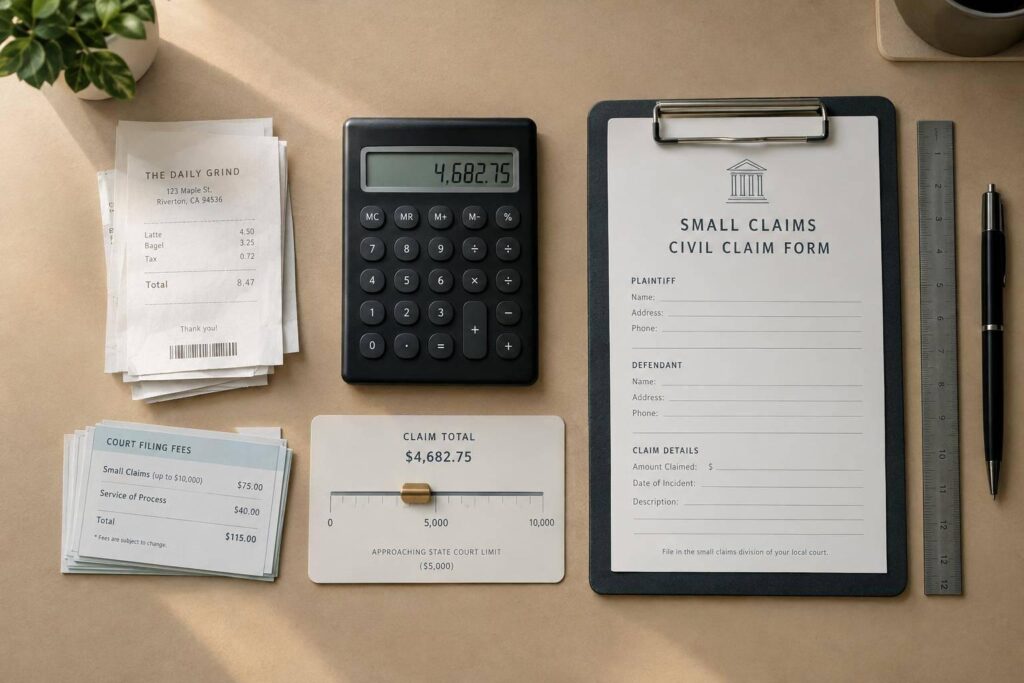
A Small Claims Calculator can help you get organized before you decide whether a dispute may fit within a local court’s dollar limit. Instead of guessing, you can add the main pieces of a claim—such as the amount owed, possible interest, filing fees, service costs, and other out-of-pocket expenses—and see the total in one place.
I’ve been on the receiving end of a small claims case built on bad math. An answering service I used for a tiny business in Atlanta was billing me around $500 for maybe two calls a month. I had the call-forwarding records, so I sent them a check marked “payment in full” for what I calculated was reasonable. They cashed it, and then they sued me anyway.
Why an Estimate Matters
Small claims rules often vary by state, and sometimes by county or court. That means the same dispute amount could fit within one jurisdiction’s cap but exceed another’s. A reliable small claims court limit estimate gives you a practical starting point, especially if you’re dealing with an unpaid invoice, property damage, a security deposit issue, or a contract dispute.
What This Tool Helps You Review
This claim amount estimator is designed to keep things simple. You enter the core numbers, choose whether to include interest and costs, and compare the result against the applicable limit when available. If local data is incomplete, you can still use the tool as a rough planning aid and then verify the rule directly with the court.
Here’s what that case taught me: the number on a claim is only as good as the work behind it. I found the doctrine of accord and satisfaction, filed a motion to dismiss with the case law to back it up, and refused to budge in mediation even when they showed up with three witnesses. The judge dismissed the claim. Whichever side you’re on, know exactly how your number was built and be ready to defend every line of it.
This page is informational only. It does not offer legal advice, predict outcomes, or determine what a court will allow.
FAQs
Does this tool tell me whether I can legally file in small claims court?
No. This calculator is for informational estimates only and does not provide legal advice or decide whether your case belongs in small claims court. It helps you compare a possible claim total against a court limit, but eligibility rules can depend on your location, claim type, who the parties are, and whether certain costs or interest are allowed.
Are filing fees, service fees, and other costs always recoverable?
Not always. Some courts may allow certain costs to be added or awarded, while others may limit what can be claimed or recovered. That’s why the tool treats these amounts as optional and includes a neutral reminder to check your local court’s rules before relying on the total.
How is interest calculated here?
The calculator uses simple interest, not compound interest. If you enter a valid due date and filing date, and the filing date is later than the due date, it applies this formula: base claim amount × annual interest rate × days between dates ÷ 365. If the dates are missing or invalid, the interest estimate should stay at zero unless a separate flat interest amount option is offered in the interface.