
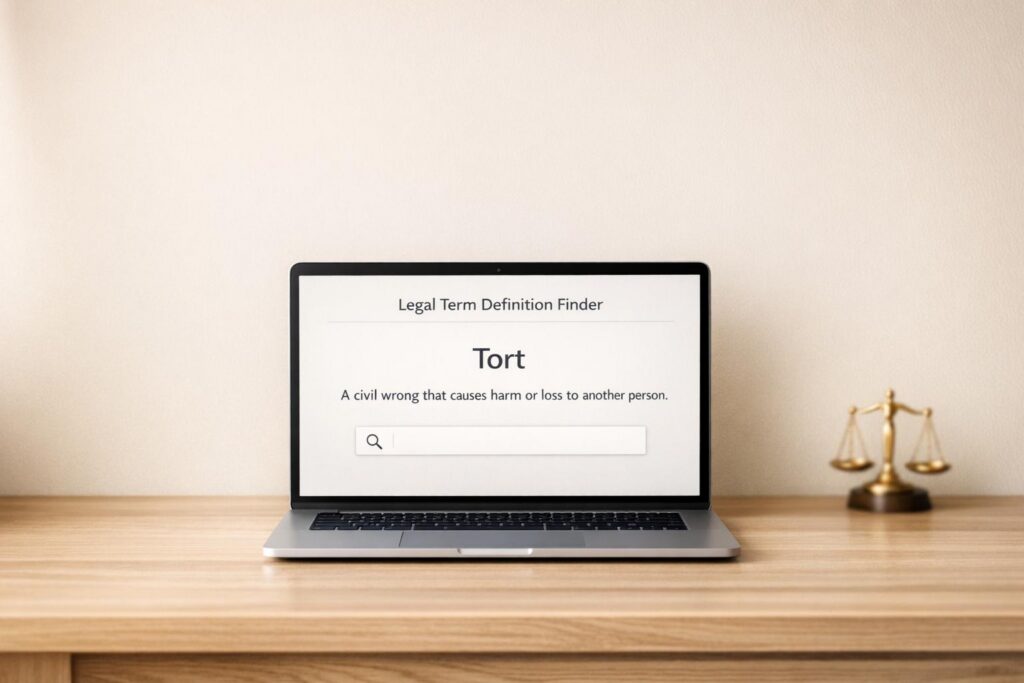
Legal terminology can be confusing, but understanding key terms is essential for self-represented litigants navigating the court system. A legal term definition finder helps you quickly look up unfamiliar words and phrases so you can understand court documents, filings, and proceedings. Use this tool to search for definitions of common legal terms.
Understand Legal Jargon with Ease
Navigating the world of law can be daunting, especially when you’re faced with unfamiliar terminology. Whether you’re reviewing a contract, preparing for a court case, or just curious about a specific phrase, having a reliable resource to break down complex language is invaluable. That’s where a tool to decode legal terminology comes in handy, offering straightforward explanations that anyone can grasp.
I spent months learning that the hardest words in legal documents aren’t the big, fancy ones like “jurisdiction” or “discovery”—they’re the small, ordinary-looking words like “shall,” “may,” and “should” that mean completely different things in court. When I first started reading my case documents, I assumed I’d struggle with complexity, but what actually stopped me was not understanding that “shall” is mandatory while “may” is optional.
Why Legal Language Matters
Legal documents are often packed with specialized words that can confuse even the most diligent reader. Terms like ‘deposition’ or ‘indemnity’ might pop up without context, leaving you puzzled. A resource that simplifies these concepts not only saves time but also empowers you to make informed decisions. Imagine being able to quickly look up a definition and see how it applies in real-world scenarios—it’s like having a translator for the law right at your fingertips. Beyond personal use, students, small business owners, and everyday folks can benefit from demystifying the language of the legal system. So next time you’re stumped by a tricky phrase, turn to a trusted glossary to shed light on the matter without the headache.
Legal language isn’t a code that only lawyers can crack—it’s just a different way of saying things, and you can learn to read it. My background as an information specialist taught me that any specialized field has its own vocabulary. This tool exists because someone understood that you shouldn’t have to feel confused when you’re reading documents about your own case. Start with the terms that show up in your specific case, and don’t move forward until you understand what each one means.
Related Articles
- Legal Deadline Calculator
- Civil Court Terms: Basic Legal Vocabulary Guide
- FAQ: Answering Common Questions About Pro Se Litigation
FAQs
What kind of legal terms can I look up with this tool?
You can search for a wide range of common legal terms, from ‘affidavit’ to ‘jurisdiction.’ Our glossary focuses on terms you’re likely to encounter in contracts, court documents, or everyday legal discussions. If a term isn’t in our database yet, let us know, and we’ll consider adding it!
Are the definitions legally binding or professional advice?
Nope, they’re not. These definitions are meant to help you understand legal jargon in a general sense, written in plain English for clarity. For anything specific to your situation, you should always consult a qualified attorney. Think of this tool as a starting point, not a substitute for legal counsel.
Can I suggest new terms to add to the glossary?
Absolutely, we’d love to hear from you! If there’s a term you think should be included, just drop us a message through the contact form. We’re always looking to expand our database to make this tool even more helpful for folks like you.