
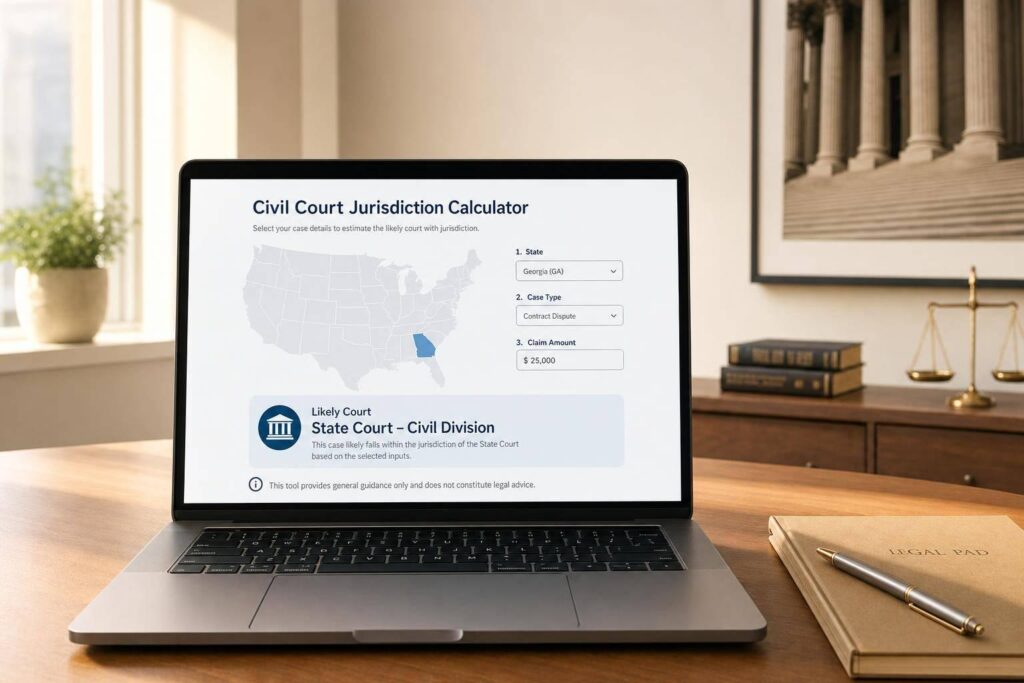
Civil Court Jurisdiction Calculator
Get a clearer starting point before you file
Knowing which court should hear your case isn’t always straightforward. Filing in the wrong court can waste time, delay your case, and create unnecessary stress. This Civil Court Jurisdiction Calculator helps users estimate the proper court based on where the dispute happened, what kind of civil matter is involved, and how much money is at stake.
How this court lookup tool helps
Court limits vary widely across the United States. A small claims case in one state may belong in a different court level somewhere else, especially when claim caps, county rules, or court structures differ. This tool reviews the details you provide and points to the most likely venue, whether that’s small claims court, a district-level court, or a higher trial court.
It also highlights basic federal jurisdiction issues, including potential diversity or federal question situations. That makes the Civil Court Jurisdiction Calculator useful for people who want a quick, plain-English explanation before taking the next step. While it can save research time and make court selection easier, it should be used as an informational guide only. For a final decision on filing strategy or jurisdiction, it’s always best to confirm with a qualified attorney or the appropriate court.
FAQs
How accurate is the court jurisdiction result?
The result is meant to be a practical estimate based on common civil court thresholds, case categories, and basic jurisdiction rules by state. It can point you in the right direction, but local court structure, filing venue rules, party residence, and exceptions in state law can all affect the final answer. It’s a helpful first step, not a substitute for legal review.
Does this tool determine federal court jurisdiction too?
It can flag basic federal jurisdiction scenarios, including cases that may involve a federal question or diversity of citizenship. That said, federal jurisdiction is often more nuanced than a simple checklist. Amount-in-controversy rules, the citizenship of each party, and the actual legal claims involved all matter, so users should treat any federal result as informational only.
What if my state has different court names or county-specific rules?
That happens often. Some states use different names for trial courts, limited jurisdiction courts, or county-level divisions. This tool is designed to identify the most likely court level based on the information entered, even when naming conventions vary. If your county has unique filing rules or specialized divisions, it’s smart to confirm with the local court clerk or an attorney before filing.