

The 5 best legal research tools for self-represented litigants are Google Scholar, CourtListener, Casetext, FindLaw, and your local law library. These free or low-cost resources give you access to court opinions, statutes, and legal information without paying for expensive subscriptions. This guide explains how to use each one effectively.
- Courtroom5: AI-powered platform with tools like case law search, document assembly, and video training. Costs $75/month per case.
- Fastcase: Comprehensive legal research database with AI features and flexible pricing starting at $65/month.
- FindLaw: Free platform offering legal information, case law, and guides on various legal topics.
- Justia: Free resource with federal and state court decisions, legal guides, and daily opinion summaries.
- Casetext CARA A.I.: AI-driven tool that analyzes documents to find relevant cases. Starts at $89/month.
Quick Comparison:
| Tool | Key Features | Price |
|---|---|---|
| Courtroom5 | Case law search, document tools, training | $75/month |
| Fastcase | Legal database, AI tools | $65–$95/month |
| FindLaw | Free legal guides and case law | Free |
| Justia | Free cases, statutes, and legal updates | Free |
| Casetext CARA A.I. | AI document analysis, legal research | $89/month |
Start with free tools like FindLaw or Justia for basic research, or invest in platforms like Courtroom5 or Fastcase for advanced features.
AI-Powered Legal Guide for Self-Represented Litigants
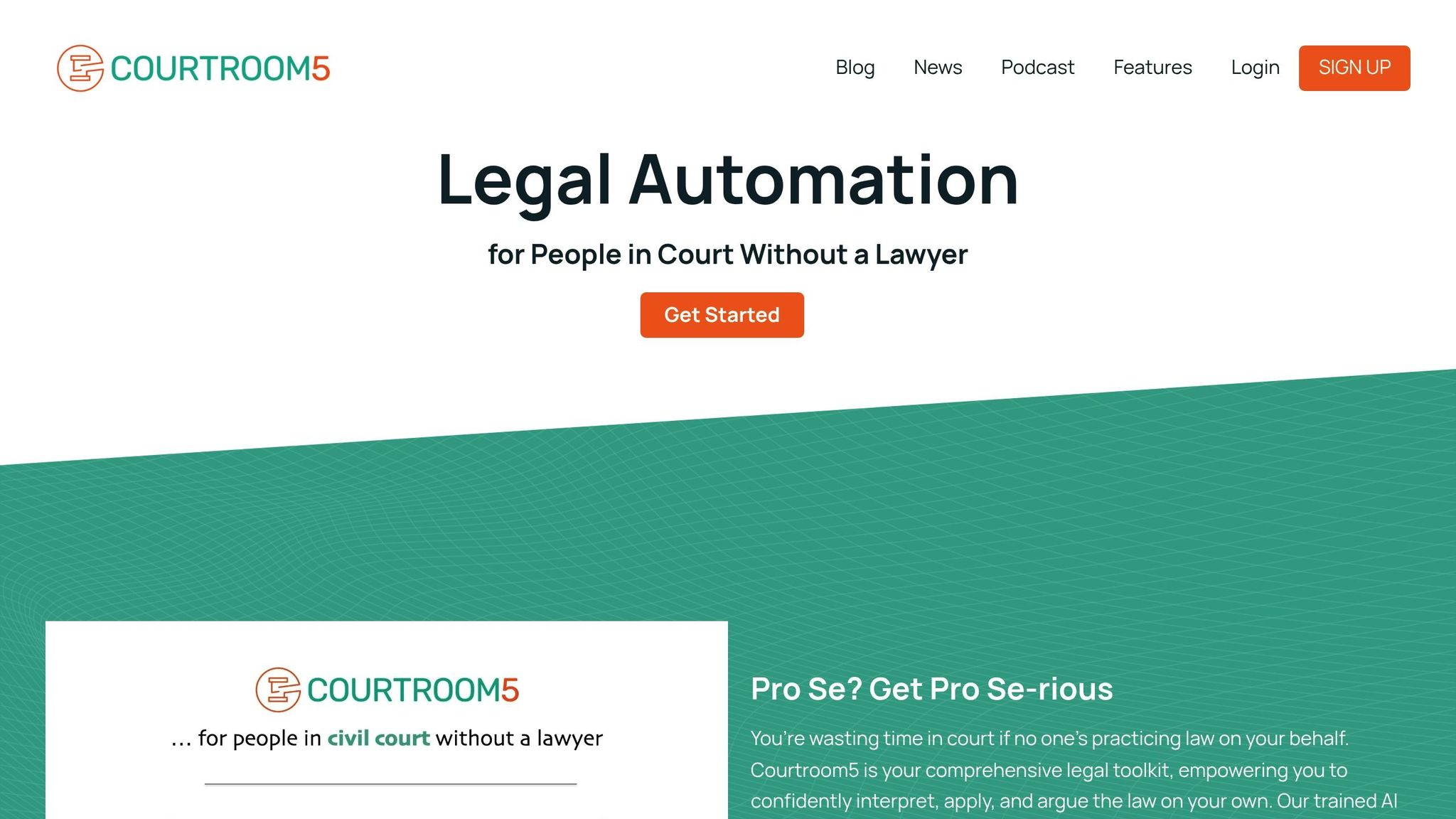
1. Courtroom5: AI-Powered Legal Support Platform
I come from a library and information specialist background, and I’m here to tell you that legal research is just research—you already have skills you don’t realize you have. When I started learning how to find case law and understand statutes, I used the same organizational and search techniques I’d used for years as an information professional. The tools available now are actually better than what I had to work with.
Courtroom5 is a case management tool designed for self-represented litigants. Impressively, 73% of its users win or settle their cases, showcasing its impact in legal disputes.
At the heart of Courtroom5 is its AI chatbot, Sylvia. Powered by Google Cloud, Sylvia monitors case progress daily and provides tailored advice. As co-founder Sonja Ebron explains:
"We guide you through the hard work of clearing procedural hurdles and show you how to create your own unique documents so you get a fair hearing in court."
The platform offers several features aimed at simplifying legal research and case preparation:
| Feature | What It Does |
|---|---|
| Case Law Search | Generates customized search terms based on your case’s specifics |
| Document Translation | Breaks down legal jargon into plain English |
| Argument Builder | Helps you craft arguments with supporting case law |
| Document Assembly | Prepares draft documents using your facts and analysis |
| Video Training | Provides animated lessons on civil procedure and legal topics |
These tools make legal processes less intimidating and more manageable. Courtroom5 has already helped prepare over 170,000 documents, proving its ability to simplify complex legal tasks. Co-founder Debra Slone emphasizes this mission:
"People are very intimidated when they go to see a lawyer, or when they go to see a judge. But civil procedure is just about what information they are asking. Courtroom5 is designed to provide just enough information to help them answer that question and choose from a limited set of options."
Even former federal judge Richard Posner endorses the platform, saying:
"For guidance on ‘do it yourself’ litigation, see courtroom5.com."
The service is available for $75 per month per case. In areas where independent lawyers are accessible, users can also get document reviews and legal advice.
2. Fastcase: Legal Research Database
Fastcase is a legal research platform designed to assist self-represented litigants with powerful tools for navigating the legal system. Following its 2023 merger with vLex, Fastcase has further expanded its capabilities, making legal research more accessible and user-friendly.
Here’s a breakdown of what Fastcase offers and how it works.
Features Tailored for Self-Represented Litigants
Fastcase provides several tools to simplify legal research:
- Multiple search options, including citation, natural language, and keyword searches.
- AI-generated headnotes and case summaries to make complex legal documents easier to understand.
- A Cert citator system that flags cases with negative treatment, helping users steer clear of outdated or overturned precedents.
Flexible Access Options
Fastcase offers various plans to meet different needs and budgets:
| Access Type | Features | Price |
|---|---|---|
| Mobile App | Case law and statutes access | Free |
| Appellate Plan | Primary law collections | $65/month |
| Premium Plan | Full access + AI tools | $95/month |
| Pay As You Go | Per-document access | $4/document |
"Our mission at Fastcase is to democratize the law, so connecting self-represented litigants as needed with lawyers is right in line with that goal."
Fastcase also integrates with Courtroom5, providing its users unlimited access to case law searches.
Practical Tools to Support Research
The platform includes additional features to streamline legal research:
- Interactive outlines for statutes and regulations.
- Tagging to help organize research materials.
- An alert system to track updates on new rulings.
- Access to treatises, practice guides, and other secondary sources for deeper insights.
Solo attorney Jack Grimes shares his thoughts:
"I am a solo practitioner who loves Fastcase. Almost spent a fortune on Westlaw but now I know that would have been a huge mistake. Fastcase has everything I need."
For those on a tight budget, Fastcase offers free access through bar associations or a $99/month unlimited plan. The mobile app, available on iOS, Android, and Windows Phone, also provides free access to its legal research database.
With these tools, Fastcase empowers users to conduct thorough, cost-effective research to build stronger cases.
3. FindLaw: Free Legal Information Resource
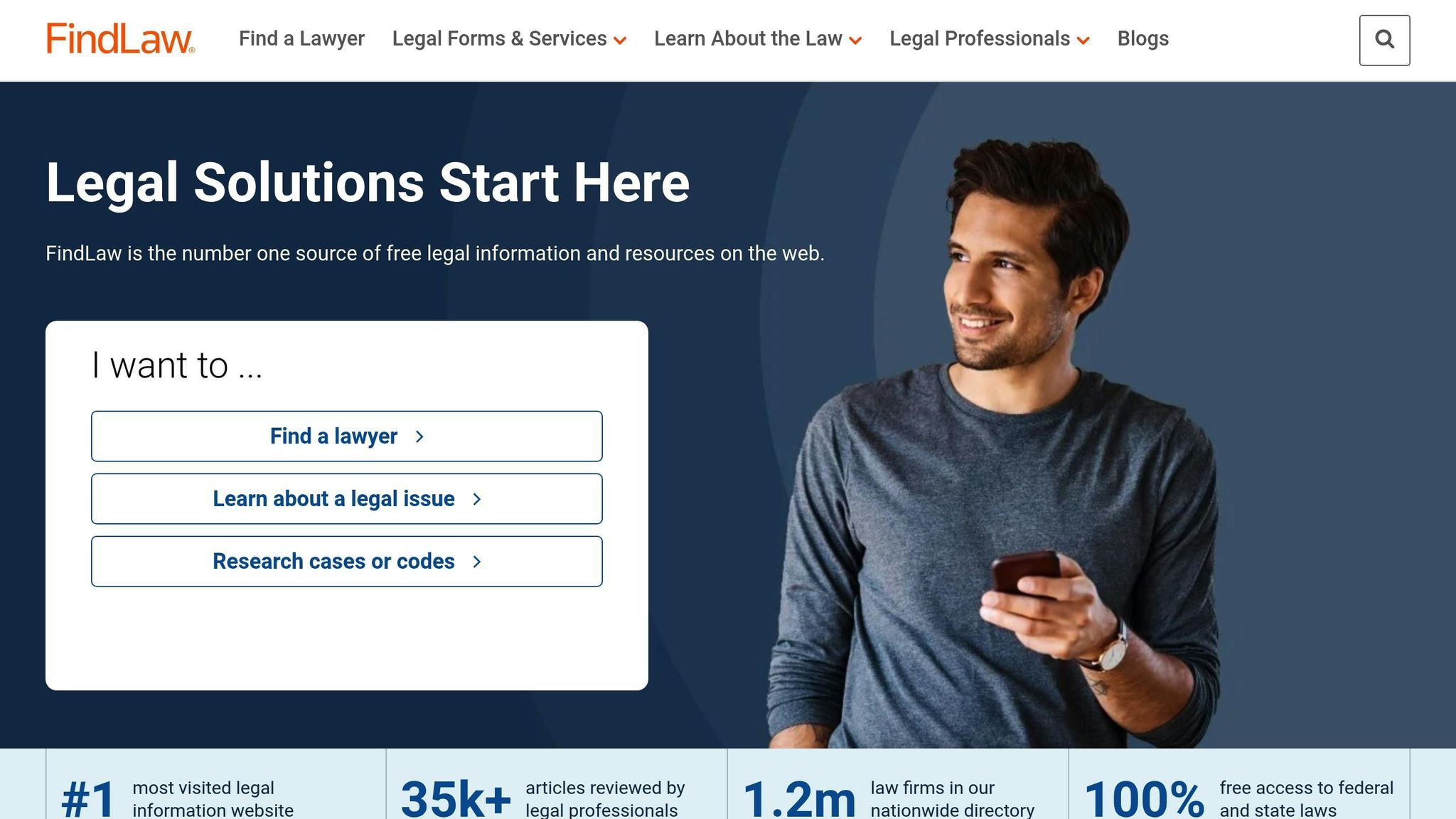
FindLaw is a go-to platform for self-represented litigants seeking free legal research tools. It offers a wide range of legal resources, all neatly organized to make research straightforward.
The platform includes a searchable database of U.S. Supreme Court decisions going back to 1760. Users can search by party name, case title, citation, full text, or docket number, making it easy to find specific cases.
FindLaw also organizes legal topics into categories, such as:
| Legal Category | Available Resources |
|---|---|
| Family Law | Divorce, custody, and support guidelines |
| Employment Law | Worker rights and discrimination cases |
| Personal Injury | Accident claims and liability information |
| Criminal Law | Defense strategies and procedural rights |
| Property Law | Real estate and landlord-tenant matters |
In addition to these categories, FindLaw provides tools to simplify complex legal issues. For example, its Case Law Navigator includes summaries of U.S. Supreme Court opinions from 2000 onward, helping users understand key decisions. The platform also offers access to current federal and state statutes, presented in a way that shows how the laws apply in real-world scenarios.
FindLaw’s practice area guides are another highlight. These guides explain legal concepts across more than 20 topics, offering clarity and support for those navigating legal challenges. The "FindLaw for Legal Professionals" section is tailored for professionals but remains accessible for anyone looking for detailed legal insights.
Recognizing the challenges faced by self-represented litigants, FindLaw provides an extensive library of state and federal case law. Each case includes concise explanations to help users understand how precedents might apply to their situation.
4. Justia: Public Legal Research Platform
The research showed me that the difference between a good case and a lost case often comes down to finding that one precedent that matches your situation. In my experience, people think legal research is this mysterious thing that only lawyers can do, but it’s really about asking the right questions and knowing where to look. What surprised me most was that many of the resources lawyers use are actually available to you for free or at a low cost. When I learned how to use Boolean operators—those AND, OR, NOT words—everything changed about how I could search.
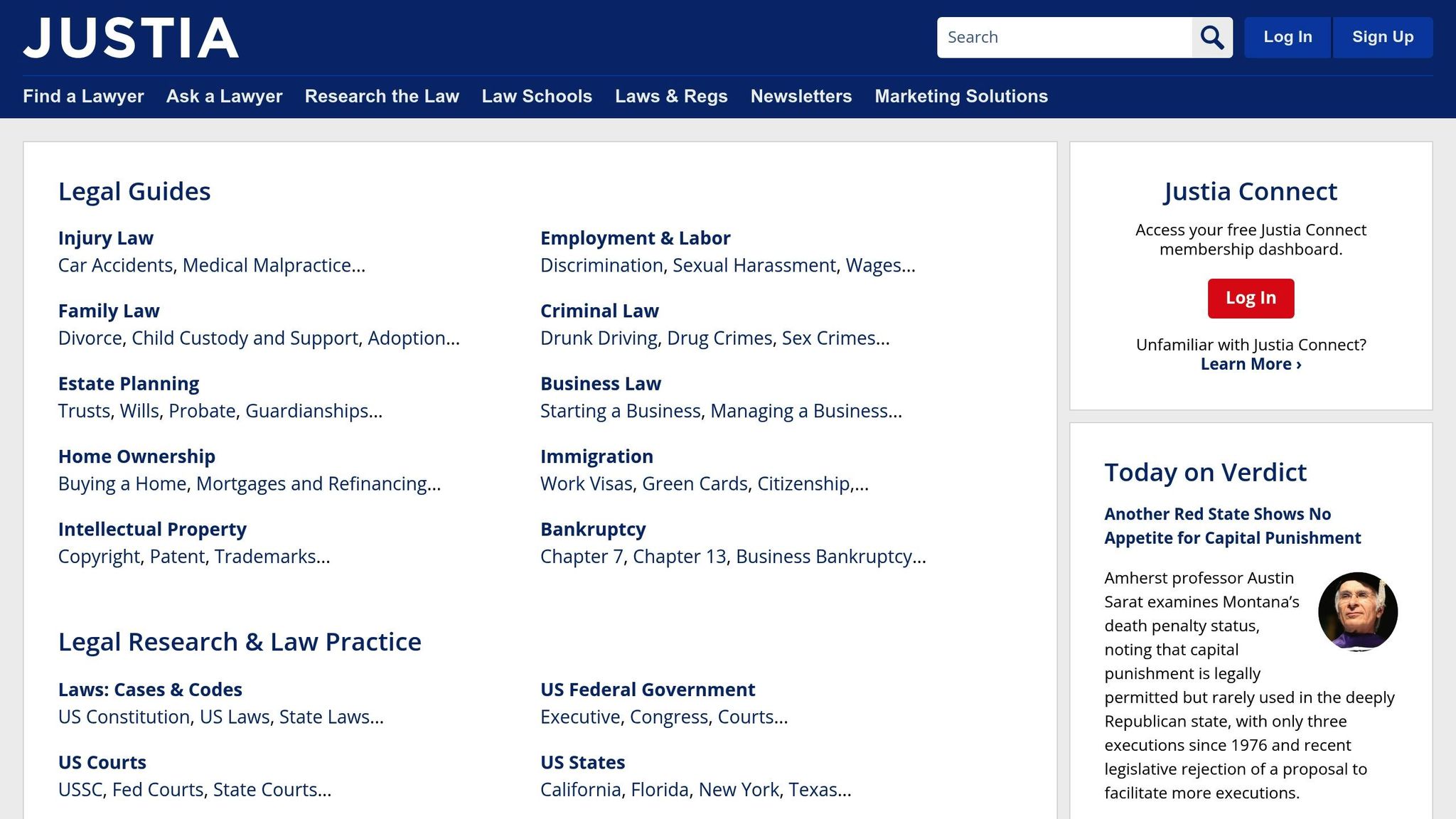
Justia is a legal research platform offering free resources to help self-represented litigants access vital legal information. Its database includes federal and state court decisions, codes, and regulations, all available at no cost.
One standout feature is its extensive collection of U.S. Supreme Court materials, dating back to 1791. This includes court decisions, opinion summaries, legal briefs, and even audio recordings of oral arguments. The platform also provides an Annotated U.S. Constitution, breaking down constitutional provisions into simpler terms that non-lawyers can understand. These resources make Justia a reliable tool for anyone navigating legal challenges.
Justia also provides tools designed to keep users informed about legal updates:
| Feature | Benefits for Self-Represented Litigants |
|---|---|
| Daily Opinion Summaries | Highlights from federal appellate and state supreme courts |
| Practice Area Newsletters | Weekly insights on specific legal topics |
| Case Filing Alerts | Notifications about new dockets in federal courts |
| Legal Guides | Easy-to-understand explanations of various legal topics |
In addition to updates and newsletters, the platform simplifies case research by offering access to databases of federal and state case law, current statutes, regulations, and recent court decisions.
Another helpful feature is its "Find a Lawyer" directory, which connects users with legal professionals when expert assistance might be necessary.
Justia’s interface is designed to be accessible even for those without a legal background. Users can search cases, statutes, and regulations using simple keywords, making it easier to find the information they need.
5. Casetext CARA A.I.: Smart Legal Research Tool
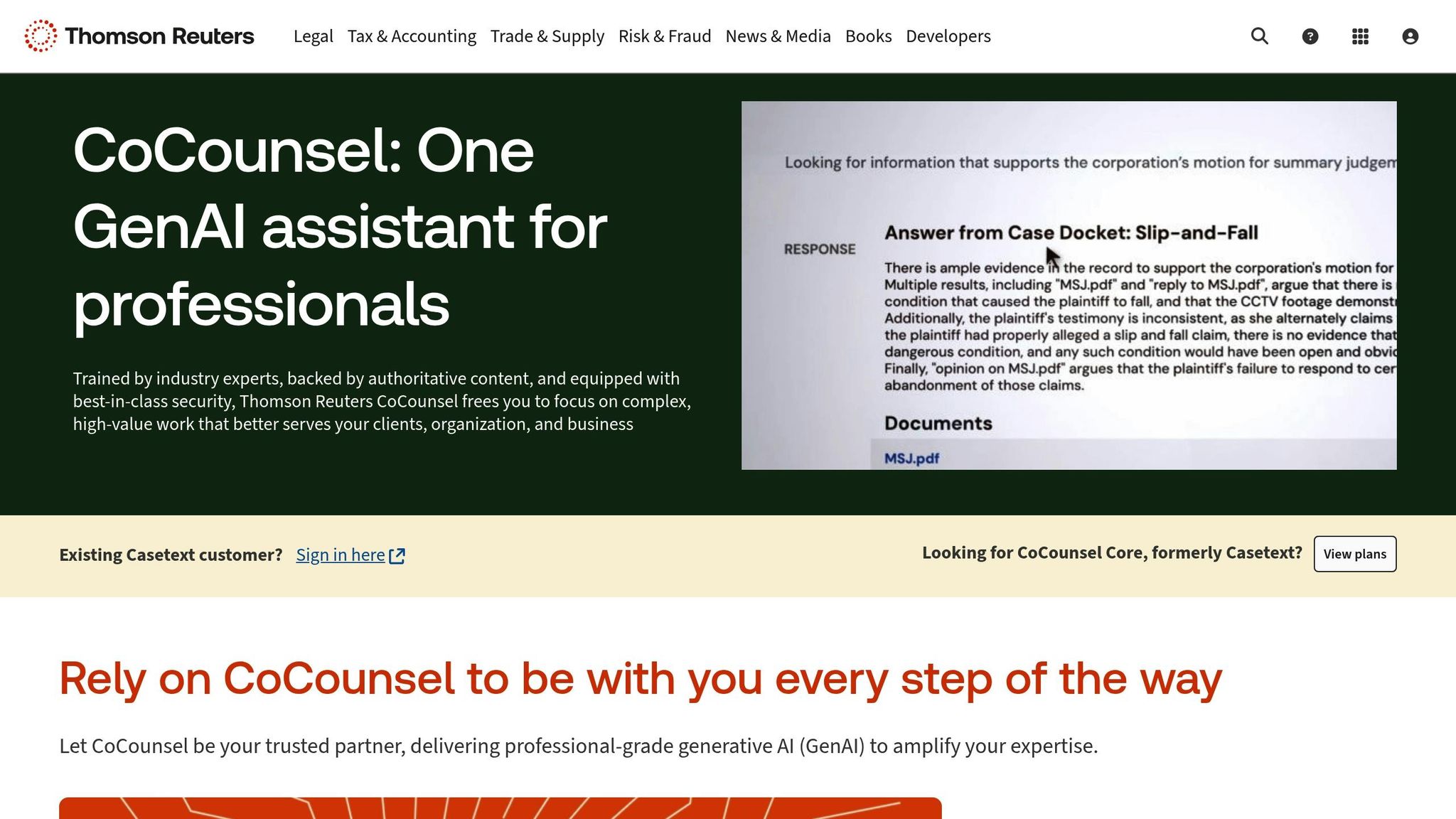
Tools are powerful, but they’re only as good as the person using them—you need to actually read the cases you find, not just the summaries. I remember wasting hours researching the wrong legal theories because I thought a case summary matched my situation, when the actual case was about something different. Always verify what you find.
CARA A.I. by Casetext is a legal research tool designed to simplify research tasks, especially for those representing themselves in court. Using AI, it analyzes uploaded legal documents to find relevant cases and precedents based on the facts and legal issues provided. Even a brief, one-page draft motion can yield helpful results, with more detailed documents improving accuracy. Attorneys using CARA A.I. report finding relevant cases about 20% faster than with traditional tools, saving valuable time.
| Feature | How It Helps Self‐Represented Litigants |
|---|---|
| Document Analysis | Finds cases with similar facts and legal issues |
| Bad Law Check | Confirms if cited cases are still valid precedents |
| Related Brief Search | Locates briefs from similar cases |
| Natural Language Search | Allows searches using plain English |
| Parallel Search | Identifies cases addressing similar legal questions |
The platform’s straightforward design is ideal for users without legal training, enabling searches with simple keywords instead of complex legal jargon. Casetext sums it up best: "Casetext understands that you don’t have to have a bar card to be a lawyer".
CARA A.I. goes beyond basic research by uncovering relevant statutes, highlighting overlooked cases, customizing search results, and ranking responses based on relevance.
"CARA A.I. uses artificial intelligence technology developed by Casetext to find cases and other authorities on the same facts and legal issues in the legal documents you upload." – Casetext
For those on a tight budget, a free version with limited features is available. Additionally, the platform uses bank-level security and ensures uploaded documents are never stored, maintaining user confidentiality. This combination of ease of use, security, and accurate results makes CARA A.I. a valuable tool for self-represented litigants.
As someone whose entire career was about helping people find information, I’m here to tell you that legal research is a skill you can absolutely learn. The tools are getting better every year, and they’re more accessible than they’ve ever been. What you need is patience, a system for taking notes, and the willingness to keep looking until something clicks into place—and you’ve got this.
Conclusion
Choosing the best legal research tool comes down to your specific needs and budget. For self-represented litigants, it’s essential to strike a balance between functionality and cost.
If you’re working with a tight budget, free platforms like Justia and FindLaw offer a great starting point. They provide access to key legal information and help users grasp fundamental legal concepts.
For those considering affordable paid options, platforms like Fastcase and Casetext stand out. Fastcase plans start at $65 per month, and many state bar associations even offer free access. Casetext, with its AI-powered features, is priced at $89 per month, which is still more affordable than higher-end platforms like Westlaw.
| Monthly Cost Comparison (Federal & State Coverage) | Individual Access |
|---|---|
| Casemaker | $60 |
| Fastcase | $65 |
| Casetext | $89 |
| Lexis Advance | $173.84 |
| Westlaw | $277.00 |
"The truth is, the vast majority of the legal research you need to competently run your practice can be accessed for free. Take your time to use and learn the above tools and you will soon be wondering why you ever paid for those expensive research platforms." – Jennifer Anderson, Founder of Attorney To Author
To get the most out of your legal research tools, consider these tips:
- Start with a free trial to test how user-friendly and effective a platform is.
- Define your needs, including your jurisdiction and the depth of research required.
- Check customer support options, which can be a lifesaver for self-represented litigants.
These tools make research quicker and easier by providing access to extensive legal databases. While premium platforms may save time for those with heavy research needs, combining free resources with affordable tools is often enough for most self-represented litigants. Look for features like natural language search and intuitive interfaces to simplify the process. By picking the right tool, you’ll be better equipped to navigate the legal system with confidence.