
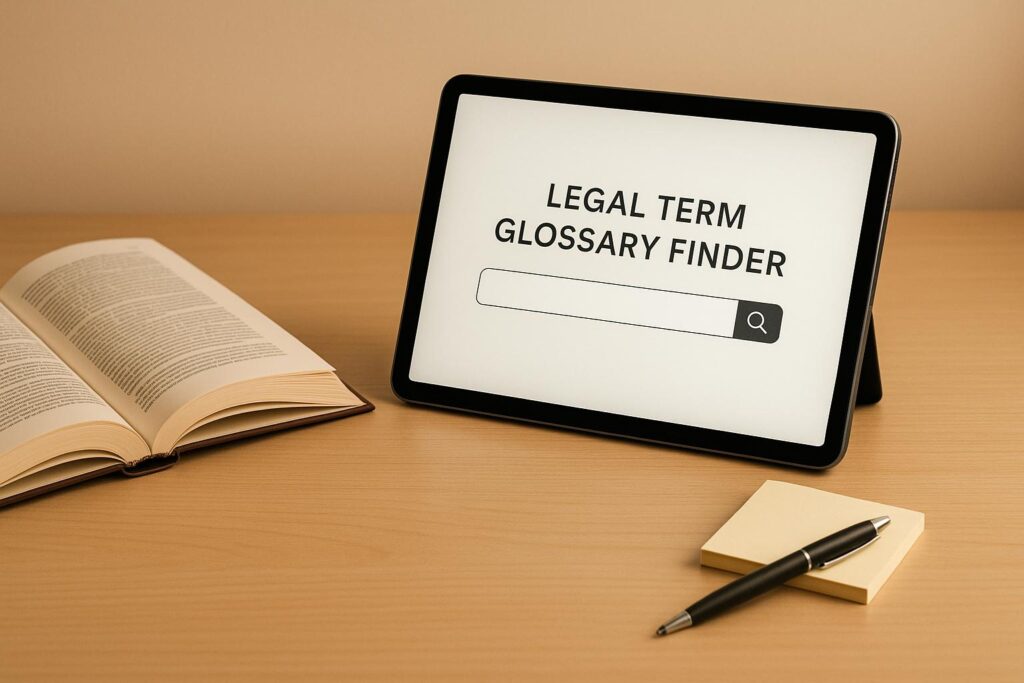
Unlock Legal Language with Our Legal Term Glossary Finder
Navigating the world of law can be daunting, especially when terms like ‘affidavit’ or ‘jurisdiction’ pop up in documents or conversations. That’s where a reliable tool to decode legal jargon becomes a game-changer. Our free resource offers a searchable database packed with easy-to-understand definitions, designed specifically for non-lawyers who need clarity without the complexity.
I have a PhD in Library and Information Science, so you’d think legal research would come naturally to me. It didn’t—at least not at first. When I was writing my own appeal after losing a summary judgment, I realized the legal dictionary wasn’t enough. I needed to understand how courts actually interpreted these words in real cases. That experience is exactly why we built tools like this one.
Why Understanding Legal Terms Matters
Whether you’re signing a contract, dealing with a family dispute, or just curious about courtroom lingo, knowing what these words mean empowers you to make informed decisions. Instead of feeling lost in a sea of unfamiliar phrases, you can quickly look up meanings, explore related concepts, and even save key terms for future reference. This kind of accessibility bridges the gap between legal professionals and everyday folks.
Here’s something that surprised me when I was learning legal language: the big words weren’t my problem. "Res judicata," "affirmative defenses," "prejudice"—I could look those up in Black’s Law Dictionary and understand them clearly. The words that stumped me were the little ones. Does "shall" mean it absolutely has to be done? What about "may"? Or "should"? Those teeny tiny words caused me more trouble than any Latin phrase. I had to trace how courts interpreted them in different contexts before I could write my brief with confidence. If you’ve ever felt confused by words that seem simple but carry hidden legal weight, you’re not alone.
Features That Make Learning Easier
Beyond simple explanations, our tool lets you browse alphabetically or search directly for specific entries. You’ll also find connections to associated ideas—like linking ‘notary public’ when reading about sworn statements. With the option to create a personal list of frequently needed terms, staying on top of legal language has never been simpler.
I used my research skills to figure out what those tricky little words meant—and I won my appeal. The reversal was so swift and decisive that the original judge recused himself from my case entirely. You don’t need a law degree to understand legal language. You need the right tools and the patience to look things up. That’s what we’re giving you here.
FAQs
Who is this Legal Term Glossary Finder designed for?
This tool is built for anyone who’s not a legal expert but needs to understand legal language. Think of students, small business owners, or folks dealing with personal matters like divorce or contracts. We’ve made sure the definitions are straightforward, avoiding the dense jargon you’d find in a law textbook, so you can grasp the meaning without a headache.
Can I access terms from specific areas of law?
Absolutely! Our database covers a wide range of legal fields, including family law, criminal law, contracts, and property law, among others. Whether you’re curious about ‘custody’ in a divorce case or ‘indictment’ in a criminal context, you’ll find relevant terms with clear explanations and often links to related concepts for a fuller picture.
How do I save and manage my frequently searched terms?
It’s super easy. When you look up a term, just hit the ‘Save to List’ button next to the definition. It’ll be added to your personal list, which you can access anytime from the dashboard. From there, you can print the list or download it as a PDF—perfect for keeping handy during legal discussions or research.