
Civil Court Evidence Analyzer
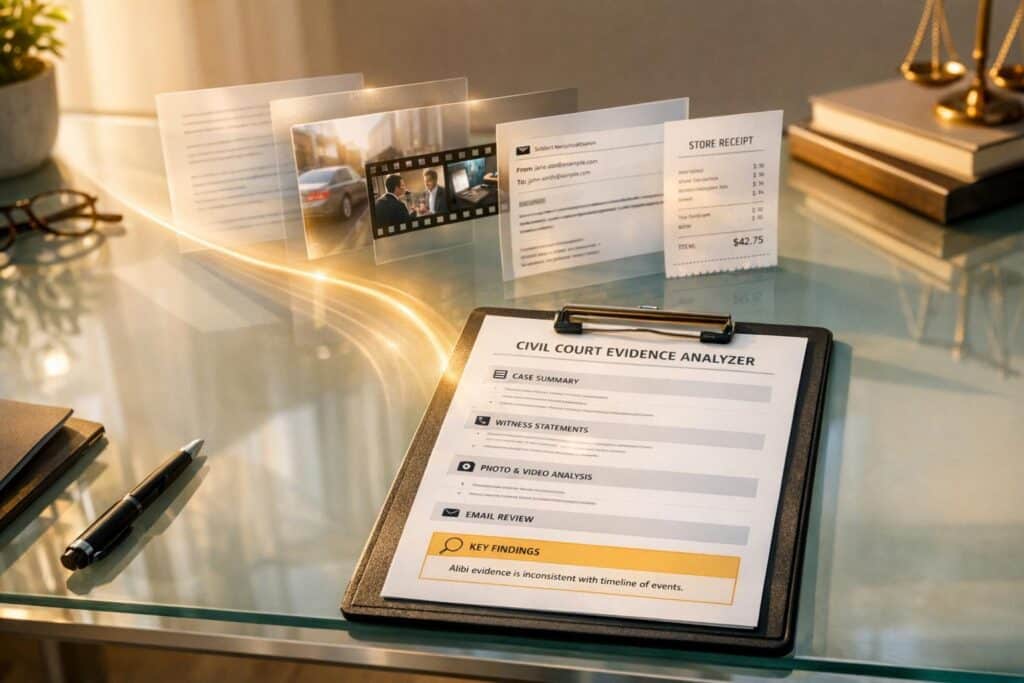
Keeping evidence organized can make a major difference when you’re preparing for a dispute. The Civil Court Evidence Analyzer gives users a practical way to sort documents, photos, videos, and other records into a clear case structure. Instead of juggling scattered files and handwritten notes, you can build a cleaner overview of what you have and how each item connects to a claim or defense.
Why organized evidence matters
In civil litigation, details matter. A missing date, an unclear description, or evidence with no stated relevance can weaken your presentation. This tool helps reduce that problem by prompting users to enter complete information and flagging missing details before a report is created. That means the final summary is easier to review and more useful for case preparation.
Turn records into a usable case summary
A strong civil court evidence analyzer should do more than store information. It should help users identify patterns, categorize proof logically, and uncover weak spots that may need follow-up. This evidence review tool is built for clarity first, producing a downloadable PDF with categorized entries, strengths, weaknesses, and evidence gaps. For anyone preparing a civil matter, that kind of structure can save time and improve decision-making.
FAQs
What kind of evidence can I add to this tool?
You can enter common civil case evidence such as documents, photos, videos, emails, messages, receipts, contracts, and other records. Each item is logged with key details like date, description, and relevance to a claim or defense, which makes the final report much easier to understand.
Does this tool decide whether my evidence will win the case?
No. The tool is designed to organize and summarize information, not to predict court outcomes or replace legal advice. What it does well is help you see how your evidence is structured, where support is strong, and where you may need more documentation or clarification.
Why is validation important before generating the report?
Incomplete evidence entries can lead to a confusing or misleading summary. Validation helps catch missing dates, vague descriptions, or unassigned relevance before the PDF is created, so the final report is more accurate, useful, and easier to review with an attorney or on your own.