
Wrongful Termination Case? How Jenna Fought Retaliation Without a Lawyer
Jenna was fired after reporting sexual harassment. She didn’t send the furious email. She built a record, won the evidence she needed, and settled on her terms without a trial.
A composite story drawn from member experiences. Details below.
For four years, Jenna managed customer support. She knew which customers needed a call instead of another email. She trained new staff, covered the hard shifts and built her week around other people’s problems.
Then she reported her supervisor’s repeated sexual comments to HR. Her hours were cut. She was left out of meetings. Then she was fired for “poor performance.”
Her first instinct was to email the whole department a list of everything she’d endured. She wrote it, then stopped. Some of those events had records. Others she remembered differently now that she was angry.
The company had lawyers. Jenna couldn’t afford one. She’d also heard about earlier harassment complaints at the company, and she believed the records of how those were handled mattered. She just didn’t have them.
See if your case qualifies →5 questions. 2 minutes. $1 once. Nothing renews.
Proof: a report, an action, a connection

Proof helped Jenna turn her account into questions she could investigate. The first lesson was hard: an unfair firing isn’t automatically an illegal one. Most jobs can end for almost any reason. Firing someone for reporting harassment is different. That’s retaliation, and the law protects against it.
She saved the HR report, her schedules, her reviews and the termination letter. Her report described sex-based harassment, not just a workplace disagreement, and she confirmed her employer was large enough to be covered by Title VII.
What Jenna had to prove
A retaliation claim has three parts: a protected report, an action against you, and a connection between them. Here’s what she matched to each.
| Question | Her evidence |
|---|---|
| What protected activity did she engage in? | Her written report of sex-based harassment, what it said and when HR received it |
| What actions followed? | Later schedules, meeting invitations and the termination notice Gap found She’d listed every cut in hours as retaliation, but one schedule showed the first cut came before her report. |
| What connects them? | Who knew about the report, when decisions were made and the reasons the company gave. Timing mattered, but it wasn’t the whole answer. |
| What did she lose? | Pay and benefits records, her job search and her later earnings |
Employment laws, coverage and deadlines vary by employer size and state. Proof shows the elements that apply to your claim.
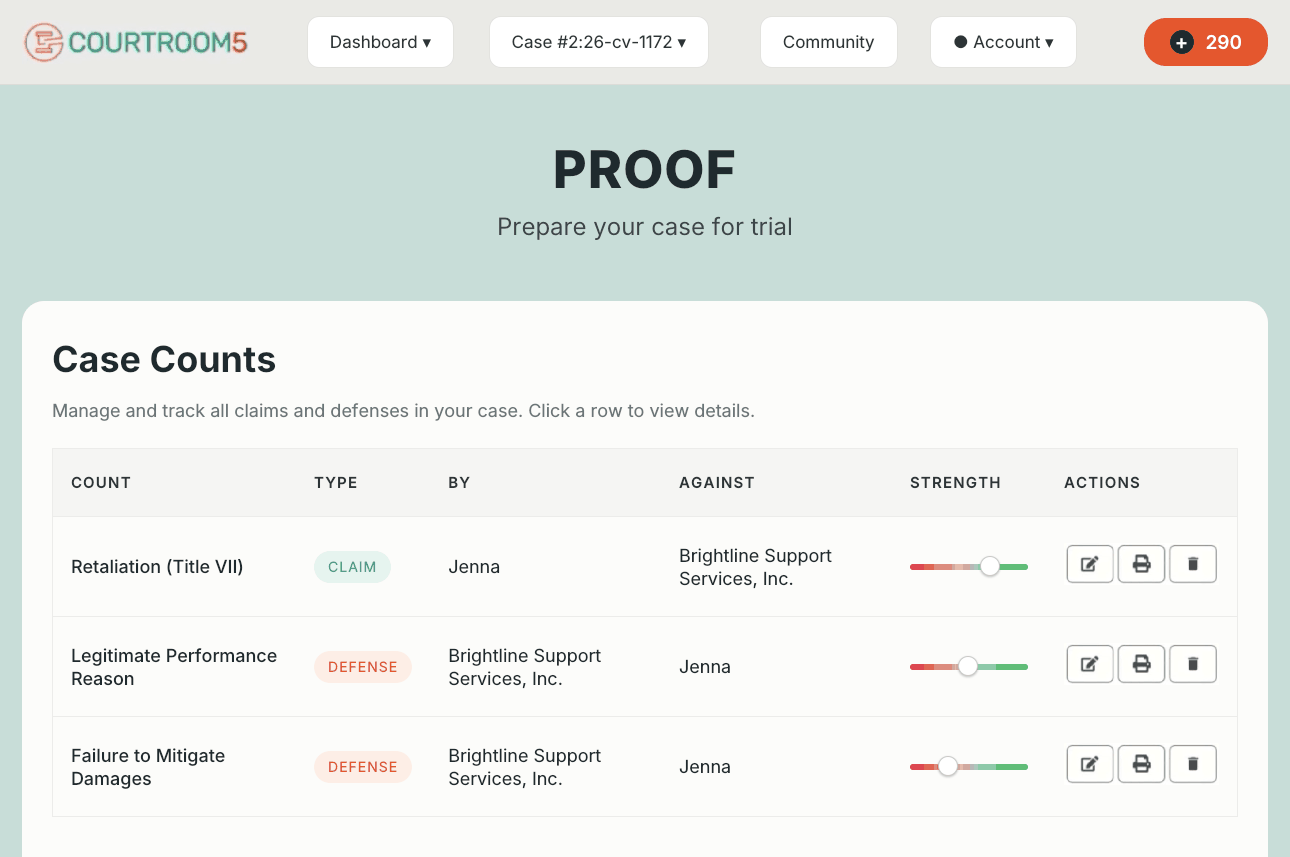
She moved that first cut out of the retaliation column and investigated the later ones separately. Reporting harassment didn’t protect her from legitimate discipline, so she had to test the company’s performance explanation, not assume it was false.
Doubt, at the library

At a library computer, Jenna opened a job application. It asked why she’d left her last job. Her fingers hovered over the keys. She could already picture spending the interview defending a lawsuit instead of showing what she could do.
She closed the case folder and finished the application first. Later, a Learning Center lesson helped her sort the facts, and a community thread helped her organize the timeline. She set aside blocks of time for the case and separate blocks for finding work.
Strategy: the agency step came before court

Strategy helped Jenna compare the agency process, mediation and a lawsuit. She learned she couldn’t go straight to court: a Title VII claim starts with a charge at the Equal Employment Opportunity Commission, and that deadline was already running. Talking to HR hadn’t paused it.
She filed her EEOC charge on time, answered the employer’s response and sent the records the agency asked for. Mediation didn’t resolve it.
When the EEOC issued her Notice of Right to Sue, she saved it with proof of when it arrived. She had 90 days from receipt to file in court. The notice let her sue. It wasn’t a finding that she’d win.
Fired after reporting harassment or discrimination?
See if your case qualifies →$1 gets you 100 credits and community access. Nothing renews.
Documents: explain the claim, not every bad day

In Documents, Jenna researched the law and prepared a federal complaint: her report, the actions that followed and the facts connecting them, using her corrected timeline. She filed within the 90 days and arranged service.
The company’s lawyers moved to dismiss, arguing she hadn’t stated a retaliation claim. Jenna answered their argument, not every conflict she’d had at work. At the hearing, she answered the questions asked. The court let the claim go forward. That didn’t prove retaliation. It meant the case could move to discovery.
Discovery: ask for evidence, not everything

Jenna knew about the company’s history of harassment complaints. The question was which records actually bore on her claim: who knew about complaints, how the company handled them, and how that connected to the people who decided to fire her. She narrowed her requests by people, subject and time period.
The company objected. She reviewed each objection, narrowed what she could and tried to resolve the rest with its lawyers. When that failed, she prepared a motion to compel. Judge Practice made her connect every request to her own claim.
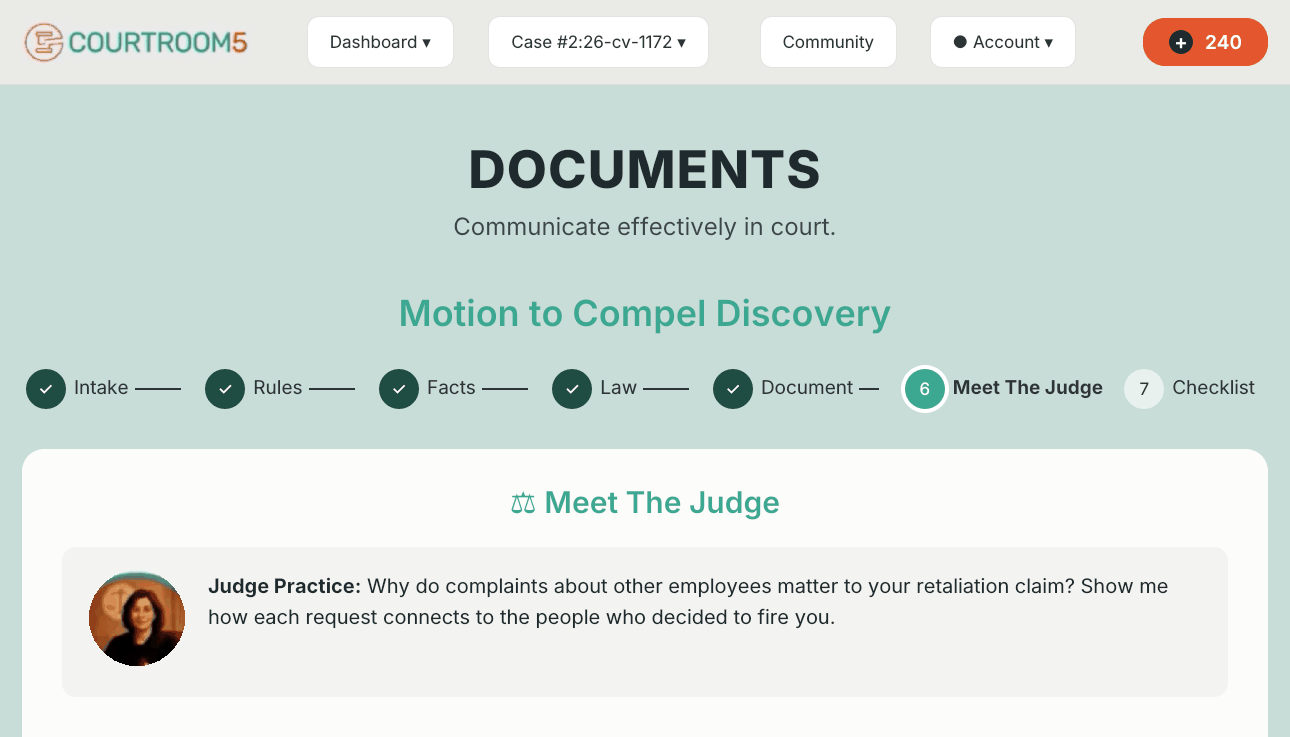
The court granted her motion and ordered specific records produced, with confidentiality protections. She’d won access to evidence, not a finding that the company retaliated.
The witness the company wanted to shield

The records sent her back to Proof. One performance concern she’d minimized turned out to be real, and she added it. Other records showed the company’s explanation for firing her had shifted. When she found a new job, she updated her lost pay instead of counting every month as lost.
The records also pointed to a vice president with his own history of harassment complaints and knowledge of how complaints were handled. Jenna asked to depose him, with questions tied to her claim, not his reputation. The company asked the court to block it.
The court allowed the deposition on defined topics. Now a vice president would have to answer questions under oath. Only after that ruling did the company agree to her settlement terms. The deposition never happened.
A decision to settle, and a real ending

The agreement gave Jenna the compensation she’d asked for and a defined reference procedure, so she could answer future employers without reopening the dispute every time someone called her old workplace.
She got independent advice on the release, how the payment would be taxed and the exact reference language, and weighed the deal against the cost and uncertainty of trial. The company admitted nothing. She accepted.
She confirmed the payment and the reference procedure, filed the dismissal the agreement required and checked the court record until the case was closed. There was no trial and no finding that the company retaliated.
What a case like this costs
On Courtroom5, you see the price of every step before you take it. Typical ranges:
- Analyzing your case and the legal issues: about 165–270 credits
- Drafting one document (such as a complaint or a motion to compel): about 225–725 credits
- Preparing for and responding to discovery: about 420–1,385 credits
Your first 100 credits are $1. After that, credits are 15¢ each, or 1,000 a month with Max for $99. Community, office hours and courses never use credits.
Plan for outside costs too. Federal cases involve a filing fee and service costs, and depositions involve court reporters and transcripts. Courtroom5 doesn’t cover these.
A week that wasn’t about the case

Jenna put the closing folder away. The settlement hadn’t erased what happened. It gave her a decision she understood and an ending she could check.
At her new job, she learned the customers and the names of her coworkers. When a hard call ended, she didn’t open the old timeline. She took her lunch outside.
Litigate like your case matters.
Fired after reporting discrimination?
Save your report, your employment records and the dates. Check the agency and court deadlines now. They may already be running. If you’re ready to prepare your case, see whether the LAW Accelerator fits.
See if your case qualifies →5 questions. 2 minutes. $1 once. Nothing renews.
About this case study. Jenna is a composite drawn from the experiences of Courtroom5 members, not a report of one person’s case. Outcomes vary. Employment claims depend on the facts, the law, agency requirements and the court. Courtroom5 is not a law firm and does not provide legal advice. This case study is not a promise of results.
See if we can help. Start for $1