
Sued Over a Debt? How Marcus Prepared His Defense Without a Lawyer
Marcus had just started working again. Then a debt lawsuit arrived.
A composite story drawn from member experiences. Details below.
Six months without steady work had changed Marcus’s household. He put off repairs, took temporary jobs and checked his bank balance before buying groceries. Now he had a new job and a chance to catch up.
The lawsuit arrived in his second week. A company he didn’t recognize said it owned one of his old credit-card accounts and wanted the court to make him pay.
Before suing, the company had offered to settle for an amount Marcus couldn’t manage, and he’d had no way to check its numbers. Now he had court papers, and a deadline.
He folded the papers into his work bag, then took them out again. Ignoring them wouldn’t make them less real.
See if your case qualifies →5 questions. 2 minutes. $1 once. Nothing renews.
First, the deadline
Most courts give you 20 to 30 days to file a written answer after you’re served. Miss it, and the court can enter a default judgment against you without a hearing, and the collector can then pursue wage garnishment or a bank levy, depending on your state.
Marcus found the response date on his summons, checked the procedure for his court, and put the date in his calendar with reminders. He knew a letter to the collector wouldn’t pause a court deadline. He also looked into legal aid and consumer-law help. Filing an answer didn’t mean agreeing he owed the money. It meant showing up.
Proof: which account, which owner, which amount?
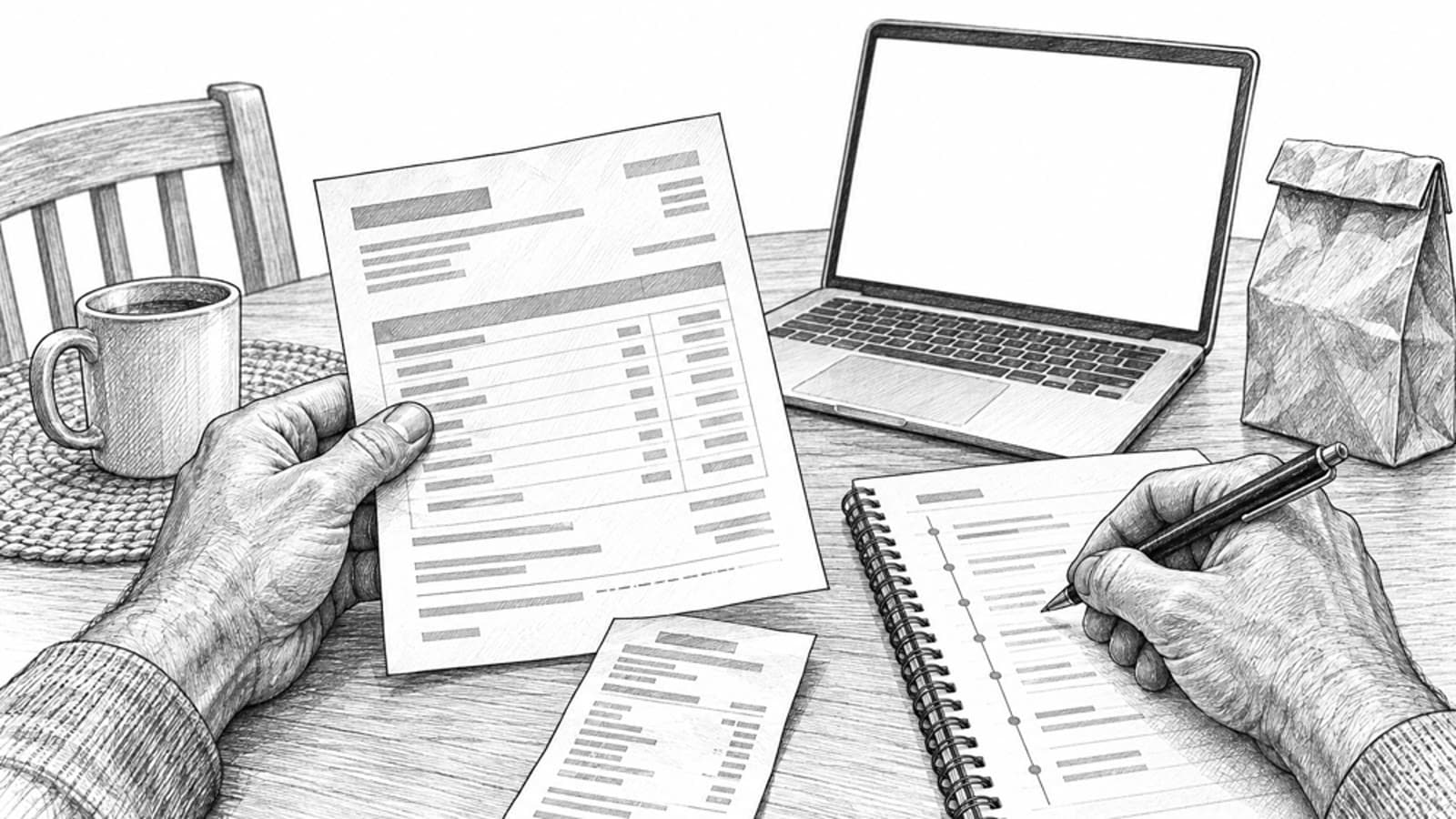
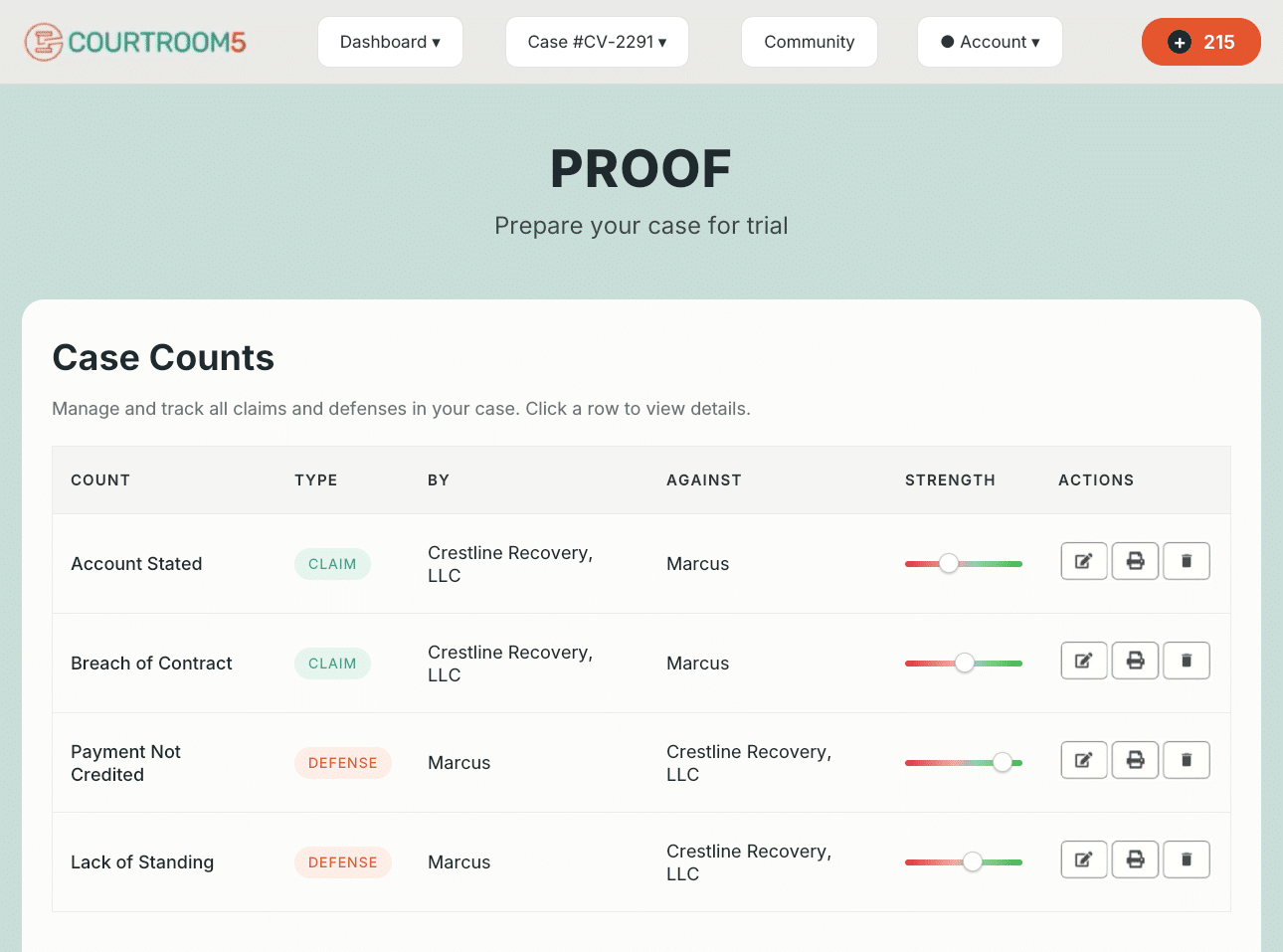
In Proof, Marcus laid out the plaintiff’s claims and the questions he needed answered. Then he gathered the old statements and payment confirmations he could find, and sorted every allegation into three piles: what he could admit, what he disputed, and what he didn’t know yet.
An unfamiliar company name didn’t prove the claim was false. A familiar address on an old statement didn’t prove the balance was right. He didn’t fill a gap with a dramatic denial just because it sounded stronger.
What the debt buyer had to prove
A company that buys old debt has to show more than a balance. Here’s what Marcus checked against his own records.
| Their claim | What Marcus compared |
|---|---|
| The account is his | The complaint against his old statements and account details |
| The balance is correct | The plaintiff’s balance history against his own payment confirmations Gap found One payment he made didn’t appear in their calculation. |
| They have the right to sue | The records showing how the account passed from the original lender to the company suing him |
| His answer is supported | Each allegation against his records and the court’s rules |
What a plaintiff must prove, and what records count, depend on your state and court. A missing document is a question to research, not an automatic win.
His Trial Notebook held the timeline and the records tied to each issue. Where evidence was missing, he marked it as an open question, not a guaranteed defense.
Fifteen minutes at a time
Marcus was afraid of losing the ground he’d just gained. At work he was learning names, systems and routes. At home, his partner needed him present and their son still wanted help with homework. He felt ashamed before anyone had established what he owed.
On a lunch break, sitting in his car, he opened the tools and organized the last document he’d received. That night he found a community thread from members handling cases while working full time. Seeing them work through the same uncertainty helped him stop treating confusion as a personal failure.
After that, he worked in pieces: fifteen minutes to find an old statement, a lunch break to check the court’s instructions, one longer evening to review a draft.
Strategy: an answer he could stand behind
Marcus uploaded the complaint to Strategy, read the plain-English summary of where his case stood, and compared his options. He decided to file an answer and raise only the defenses his records and the law supported.
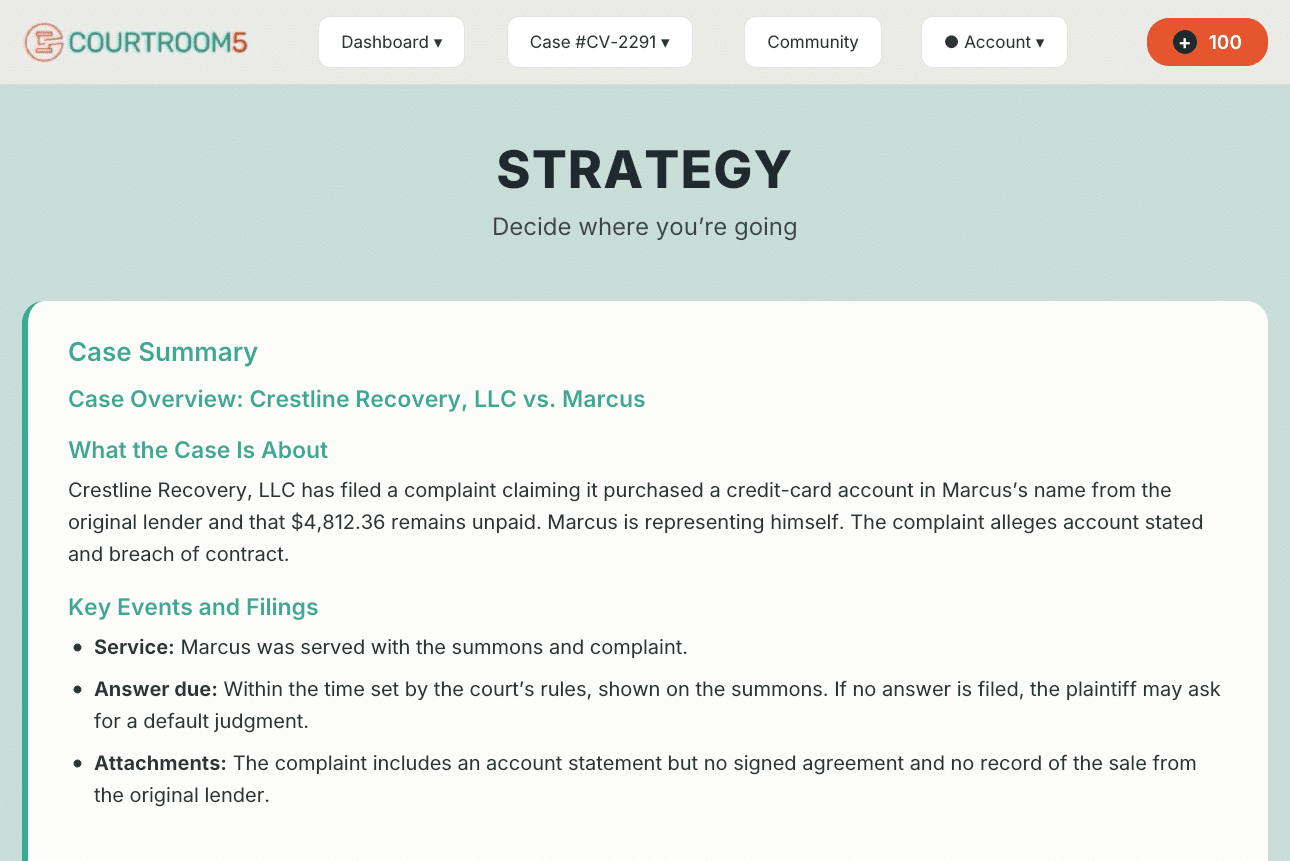
He didn’t file a motion to dismiss just because the complaint had no signed agreement attached. Whether that matters depends on your state’s rules. He researched it instead of assuming.
In Documents, he reviewed the rules for his answer, read the cases behind each defense, checked the draft line by line, and filed and served it through his court’s process. His answer was on file before the deadline.
Got a debt lawsuit, a deadline, or a balance that doesn’t add up?
See if your case qualifies →$1 gets you 100 credits and community access. Nothing renews.
Discovery: both sides’ records on the table
Marcus used Documents to send focused requests about the account, the claimed balance and the company’s ownership of the debt, and he answered the requests they sent him.
The records changed his view. He did recognize an older account. But a payment he’d made wasn’t credited, and parts of the balance still lacked support. Recognizing the account didn’t mean accepting every number. Finding an error didn’t mean the whole claim would disappear. He updated Proof with both.
Some records never arrived. He raised it with the other side first, then asked the court for help. At the hearing, he explained what he’d requested, what he’d received and why the rest mattered. The court ordered the company to produce the missing records.
Settlement: a decision, not a surrender
Before trial, the company offered to settle. This time Marcus had an answer on file, a documented dispute over the balance, and a payment their numbers had missed.
His first instinct was to reject anything from a company that had frightened him. His second was to accept anything that made it stop. He did neither. He weighed the supported and disputed parts of the balance against his budget and the risk of going to trial, and asked for the terms in writing: what the payment would settle, when it was due, what happened if he paid late, and how the case would close.
The outcome
Marcus settled for a lump sum well below the company’s pre-lawsuit offer, an amount his household could pay without borrowing. It was a compromise, not a finding that he owed nothing. But it was a number he’d earned by preparing, not one he was handed.
He kept the signed agreement and payment confirmation, checked the court record until the dismissal was entered, and saved them together. He didn’t rely on a phone assurance that the case was closed, or assume the settlement would erase accurate credit history.
What a case like this costs on Courtroom5
You see the price of every step before you take it. Typical ranges:
- Analyzing your case and the legal issues: about 165–270 credits
- Drafting one document (such as an Answer): about 225–725 credits
- Preparing for and responding to discovery: about 420–1,385 credits
Your first 100 credits are $1. After that, credits are 15¢ each, or 1,000 a month with Max for $99. Community, office hours and courses never use credits.
Plan for outside costs too. Debt cases can involve a filing fee for your answer, copies and certified mail. Many courts offer fee waivers. Courtroom5 doesn’t cover these.
What he carried forward
The settlement didn’t undo six months without work. But Marcus stopped carrying unopened papers from room to room. He keeps better records of his statements and payments now. At work, he could focus on learning the job. At home, homework help went back to being homework help.
Taking his case seriously didn’t mean knowing everything on day one. It meant doing the next useful task, checking what mattered, and deciding from a record instead of from panic.
Litigate like your case matters.
Sued over a debt? Start with your next step.
Don’t let the response date pass. If you’re ready to understand the claim and prepare your answer, see whether the LAW Accelerator fits your case.
See if your case qualifies →5 questions. 2 minutes. $1 once. Nothing renews.
About this case study. Marcus is a composite drawn from the experiences of Courtroom5 members, not a report of one person’s case. Outcomes vary. Court rules and procedures depend on your case and jurisdiction. This case study is not a promise of results.
See if we can help. Start for $1